Importance of Place - Part 5 b- Aotearoa
What I Remember

Louise’s sister, Roz, married Honé, a Māori man. Together, they had four children: Puti,
Awanui, who was the same age as my daughter, Te Maapi, and Monica P. The initial was used to distinguish her from Monica Y., me.
Later, Roz married Te Tuhi, who was also Māori. With her second husband, she settled in Northland, in the far north of New Zealand’s North Island.
When I lived with Louise, we visited back and forth with Roz’s family. Six or more children, together with a group of adults, would gather around the table. They talked over one another, passed food, interrupted, laughed, argued and created a kind of chaos that was new to me.
Then, I might have called it wild and unruly. Looking back, I now think not. There was an openness in the children, a physical confidence, and a sense that the household belonged to everyone in it. They weren't controlled, managed, or restrained in the ways I was used to.
I found it confounding and head spinning.
When we'd part, and the frisson settled, I'd wonder, what was that?
Food wasn't just fuel. It was part of the welcome, the rhythm of the household, and the way people stayed connected. Someone was always preparing, and someone was always offering food.

I was invited onto a marae, a communal sacred meeting place, for a tangi, a Māori funeral ceremony that continued over three days. I attended the final twenty-four hours. Women took turns in the kitchen, peeling kumara, chopping veggies, preparing dishes for all who had gathered.
Guests ate, slept on mats positioned around the periphery of the large room, woke to listen, and drifted back to sleep as they felt moved.
The whole experience had a rhythm that I did not recognize. An orator spoke at length and was immediately followed by another. There was no pressure to reduce grief to a time frame.
People stayed. They came and went. They listened when they could. They rested when they needed to. The practical work of feeding everyone continued alongside the emotional work of mourning.
Every person was contributing by virtue of being there. Cooking was not an interruption to the ceremony. Sleeping was not a failure to pay attention. Eating was not a distraction. Each activity was important in sustaining the community.
Grief needed food. Listening required rest. Hospitality was part of remembrance.
Newcomers introduced themselves by describing where their roots were located and who their ancestors were.
After the introduction, people greeted one another by pressing noses and foreheads together while shaking hands. The gesture is known as hongi. It looked intimate, but not intrusive.
What I have read
I later read about Māori culture to help me understand my memories.
In many Māori understandings, people are connected to Papatūānuku, Earth Mother, and Ranginui, Sky Father. Humans are not placed above forests, rivers, birds, and other forms of life. They are younger siblings within a living world.
Tangata whenua is commonly translated as “people of the land.” The phrase describes local indigenous people that holds ancestral authority, rights, and responsibilities to a particular place. It speaks to identity and connection to the land.
I was raised with a stronger sense of ownership than relationship. We ask who owns property, who has access, and what can be extracted from land. Māori perspectives invite different questions. Who is responsible for this place? What obligations come with belonging? What will remain after I am gone?
The word whenua can mean “land” and “placenta.” That connection is powerful. The placenta nourishes a child before birth, and the earth nourishes life after birth. Land is not an empty surface they walk upon. In Māori culture it is part of their origin and ongoing survival.
Tūrangawaewae means “a place to stand.” It refers to ancestral land where a person has the right to belong and can feel secure.
Standing somewhere brings responsibility. The ground supports you, but you also have to pay attention to it. You notice whether the water is clean, whether the trees are healthy, whether people are being pushed away, and whether elders are being respected.
These words don't offer me a formula for finding my own place. They do give me better questions. That's useful.
Reflections.
My grandfather settled in Saskatchewan, but his roots were in Poland. So where do I stand?
I don't have a simple answer. Saskatchewan is part of my family story because it is where my grandfather made a life. Poland is part of that story because it is where his earlier roots were planted.
British Columbia has also shaped me through its forests, coastlines, weather, and distances.
New Zealand entered my understanding through friendship, hospitality, ceremony, and the people who allowed me to witness something of their lives.
I came of age in Papua New Guinea.
Yellowknife insisted I develop grit.
These places don't have equal meaning, and I don't want to flatten them into one sentimental idea of home.
Māori relationships to ancestral land have a particular history and authority that I can't borrow.
My own search for belonging shouldn't blur that distinction.
But I can still ask what place has made of me.
***
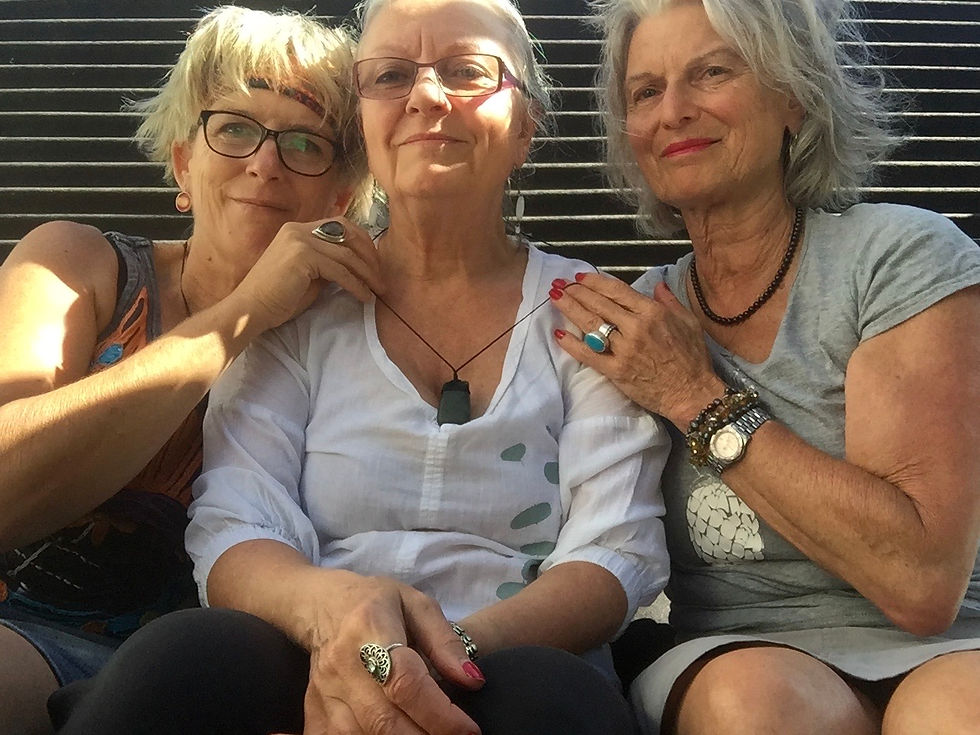
Years after my first visits to New Zealand, I returned and bought a pounamu(green stone) for myself and my daughter. I asked Te Tuhi to perform a ritual blessing over them.

During the blessing, he spoke about the connection between our lands and the relationship between Māori and the Indigenous peoples of British Columbia.
I remember the pounamu not as a souvenir, but as something that had been placed within a relationship. The blessing changed how I understood the objects. They carried memory, but they also carried responsibility. I needed to receive them with respect rather than treating them as attractive things gathered from a trip.
***
I also saw the haka performed by the All Blacks, New Zealand's national rugby team, and in other settings. The haka is often presented overseas as a dramatic performance, and it certainly has force. But reducing it to spectacle misses the relationships, history, purpose, and authority behind each particular haka. Context matters.
***
That may be the wider lesson I keep returning to.
Place is not a backdrop. A ceremony is not merely an event. An object may not be just an object.
What we open to receive becomes part of who we are.


Comments